Storytellers have often delighted us with tales of people who live under the sea. The very first story came from nearly three thousand years ago when the goddess Atargatis took to the sea as punishment for killing her friend. Sometimes we are told these mythical creatures have fish tails instead of legs, and other times they have legs just like us. There are even stories where they have fishy tails in water that turn into legs on dry land. We now have a whole library of different versions of worlds beneath the waves to choose from. It’s like a wonderful, mystical, alien world that is right on our doorstep.
One tale from the Arabian Nights that takes place both in and out the sea is the story Gulnare of the Sea.
Can you write a story that takes place under the sea?
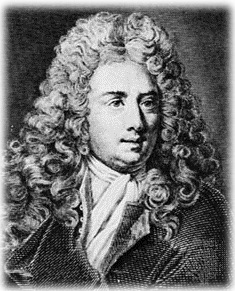
Antoine Galland is famous for being the first person to translate the Arabian Nights stories into a European language. He translated them into French.
Here are some facts about Antoine Galland…
Born in the north of France in 1646
He was the seventh child of a poor family
He studied Hebrew, Latin and Greek and learned Arabic, Persian and Turkish
He travelled in Syria and the Levant and accompanied the French ambassador to Constantinople – modern day Istanbul in Turkey – between 1670 and 1675
He kept a journal of his travels
He also translated the Koran and wrote widely on Islamic culture and the Middle East
He died in Paris in 1715
Now here are some fun activities for kids…
Antoine Galland learnt to speak several languages during his life. Do you know any words or phrases from different languages? Can you say or write any of them down?
Which language would you love to learn? How would you go about learning it?
Antoine Galland died in 1715. During his life he travelled to many different countries and kept a journal of his travels. What kinds of things do you imagine he kept in his journal?
Imagine you are on a trip to somewhere entirely new. Make your very own journal in which you record some of the exciting things you have seen, discovered, experienced, felt and learnt. To make it really interesting, use as many different methods of recording in your journal as possible – photos, stories, letters to friends and family, drawings, and so on.
There is no single author who wrote all the Arabian Nights tales, nor do they all come from the same place.
The Arabian Nights are a collection of stories that have been told and retold by generations of nomadic peoples, by sailors and merchants and by parents to their children. Ancient storytellers would adapt and embellish their stories to please different listeners and new tales would be added along the way. Collected and translated throughout the centuries by different authors, the Arabian Nights tales trace their roots back to the ancient and medieval literature of Arabia, Persia, India, Egypt and Mesopotamia.
The Islamic Golden Age, said to have started around 786 – 809, was a period of great scientific and cultural flourishing. Many great libraries, mosques, schools and hospitals were founded in Baghdad and scholars came from far and wide to share their knowledge and ideas. Many classic books of antiquity – from the Greek, Roman, Persian, Chinese, Indian, Egyptian and Phoenician civilizations – that might otherwise have been lost were translated into Arabic and Persian and preserved in a library known as the House of Wisdom. A Persian collection of the Arabian Nights tales was translated into Arabic around 850, probably in Baghdad at the House of Wisdom. From these languages these books were later translated into Latin, Hebrew and Turkish and eventually into European languages.
The Arabian Nights tales were first translated into a European language (French) by Antoine Galland between 1704 and 1717. Also known as The Thousand and One Nights, these editions became the primary source for many subsequent translations into English. This is how the stories, thoughts and ideas in these ancient tales and books were preserved and handed down to us.
The Islamic Golden Age continued until its decline which began with the crusades of the eleventh and twelfth centuries and continued with the Mongol invasions of the thirteenth century and finally culminated in 1258 with the siege of Baghdad and the destruction of that city’s great mosques, palaces and libraries.
Fact or Fiction?
It is believed that the story Aladdin and his Wonderful Lamp never existed in any of the early collections of Arabian Nights stories in Arabic, but was actually added to the collection by its French translator Antoine Galland. In a diary entry dated 25th March 1709, Galland claims that he heard the tale from a Syrian storyteller from Aleppo who he met in Paris!
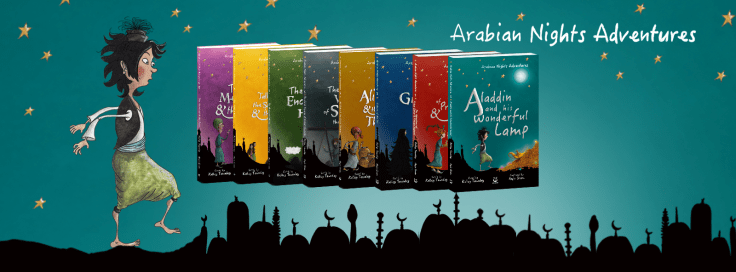
LOOK OUT FOR Arabian Nights Adventures, a collection of thirteen contemporary editions of these these all-time classic tales published by Harpendore. Beautifully retold by Kelley Townley they include wonderful illustrations by Anja Gram. Though designed for children aged 7+ years, they are much adored by older children and adults too!
The ‘talisman’ keeps cropping up in Arabian Nights stories!
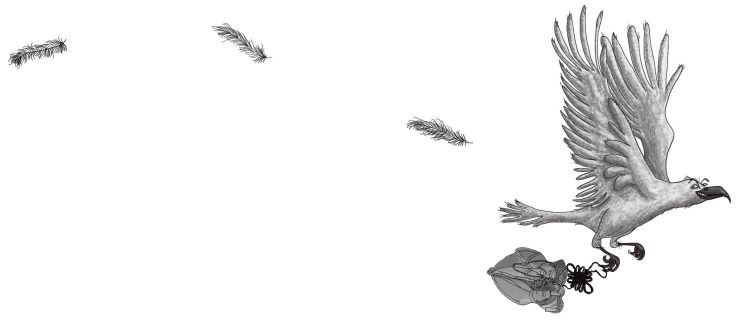
In The Adventures of Prince Camar and Princess Badoura, there is an evil bird who steals a good luck talisman that was given to Princess Badoura by her mother. This causes all manner of mishaps and woes until the talisman is found once again.
A talisman is an object which is meant to bring you luck or protection. It can be made of anything but it must be magically charged – maybe by a spell or a chant or prayer – to give it its power. It will often be carved with pictures or symbols that act as clues as to what it is for. Princess Badoura’s mother gave her a lucky talisman as a wedding present, but when she loses it there is no end of trouble until the talisman is found once again.
Imagine you are going on an adventure, perhaps to explore a strange forest or a wilderness full of magical beasts or to visit a newly discovered planet in a special rocket. You are going to need all the good luck you can get and your best friend gives you a lucky charm or a talisman to take with you.
Write a story about your adventure and draw a picture of your talisman. What powers does your talisman have? What pictures or symbols does it have that gives clues about its powers?
One day while you are on your adventure you realise your precious talisman is missing. What happens to you as a result? Do you ever find your talisman again?
Arabian Nights stories are full of long journeys and adventure-packed voyages …
… people travelling thousands of miles across land, braving deserts, mountains and seas in search of someone or something, and getting lost in faraway places before eventually finding the way back home.
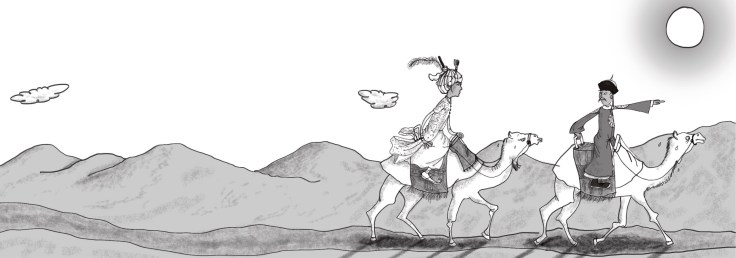
From Sinbad’s seven voyages to the evil sorcerer in Aladdin who packs his bags and journeys from Africa to China in search of a magic lamp! From Prince Camar who sets out on horseback from Persia to find his mystery princess in China to Princess Badoura who finds herself lost on the Ebony Islands at the mercy of King Armanos and Princess Hayat. Fortunately for Badoura they are kind and look after her very well! The poor shipwrecked Beder is not so lucky when he finds himself washed up on the shores of the City of Enchantments and at the mercy of the evil sorceress Queen Labe. Even the merfolk (sea people) in the story of Gulnare move effortlessly between the watery underworlds of the deep seas and the land of sultans, princes, princesses and ordinary human folk. There’s a lot of magical travel in the Arabian Nights tales, often with the help of a little enchantment or the magical jinn (genies).
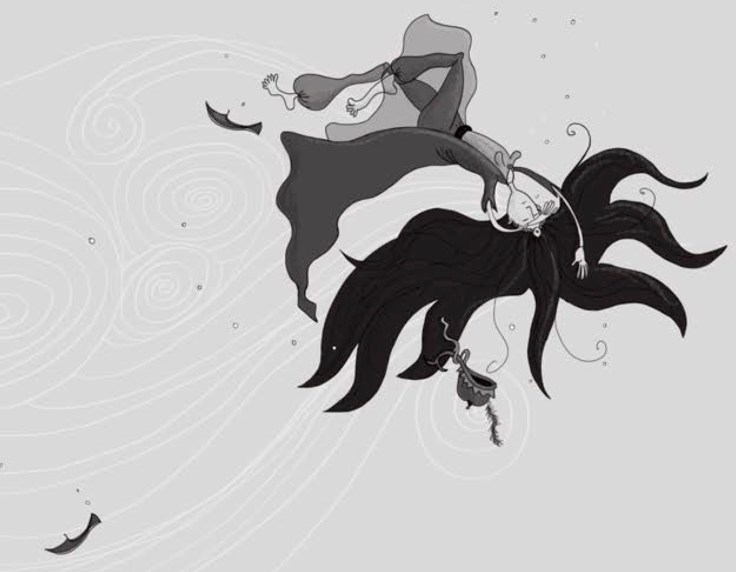
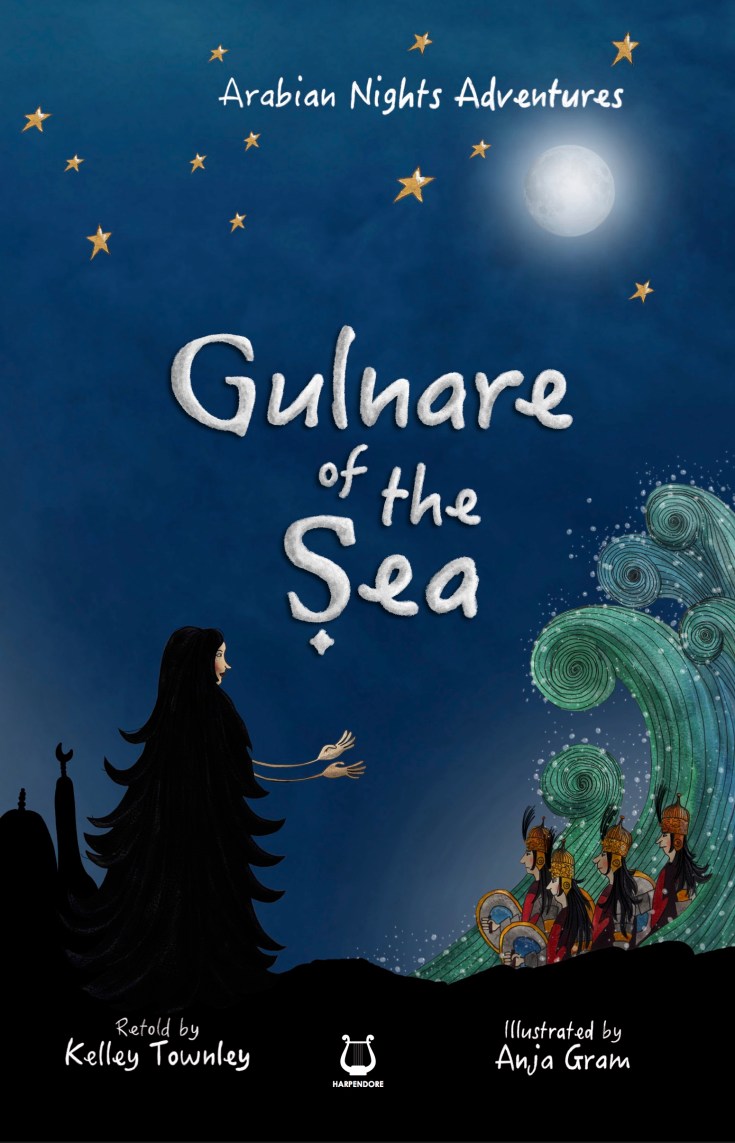
In the story Gulnare of the Sea, Princess Gia is a sea princess who is flung from under the ocean and onto dry land by powerful ocean currents after her home under the sea is invaded and war breaks out beneath the waves. The sea people in this Arabian Nights story travel as easily on land as under the sea!
But how did people really move about all those thousands of years ago in the Arabian lands of ancient and medieval times?
An ancient trading network known as the Silk Road connected many regions of China, India, Persia and Arabia. It also took in Egypt and the Horn of Africa – the most northeastern part of Africa that juts out into the Arabian Sea – and even reached as far as the Mediterranean.
The Silk Road included many different trading routes and covered a vast territory of about 6,000 kilometres. Merchants, pilgrims, monks, nomads, soldiers, nobles and ordinary city folk travelled and traded along these routes from as early as 114BC until around 1450AD.
Chinese silk was perhaps the most important commodity traded along the Silk Road but there was so much more too – porcelain and lacquerware from China, glass bottles from Egypt, aloes, frankincense and myrrh from Somalia, dates, saffron powder and pistachio nuts from Persia and even gold and silver bullion (ingots)! Perhaps it was aboard one of these very trading caravans that Aladdin’s magic lamp was brought to the underground cave of treasures on the outskirts of Aladdin’s city in Cathay (China)! Some argue that even diseases such as the Black Death, which devastated Europe in the late 1340s, were passed on along these old trading routes.
But let us not forget the exchange of ideas that also took place – everything from folk tales, religious beliefs, philosophies, technologies and other forms of knowledge. As weary travellers rested themselves and entertained each other around campfires at night they may even have told each other these very Arabian Nights tales of sorcery and magic. In this way these stories may also have travelled, from one place to the next, along the old Silk Road.
Looking for excellent contemporary editions of the all-time classic Arabian Nights tales? Check out Arabian Nights Adventures, a collection of thirteen of the best Arabian Nights stories published by Harpendore. Beautifully retold by Kelley Townley they include wonderful illustrations by Anja Gram. Though designed for children aged 7+ years, they are very much loved by older children and adults too!
Many Arabian Nights stories feature royal people such as sultans, kings, emperors or the shah, important people such as viziers and grand viziers, and magical supernatural beings such as jinn or genies.
But how much do you know about them?
Sultan / King / Emperor / Shah
Before we had presidents and prime ministers, leaders chosen by ordinary citizens who vote, we had families who ruled. When the old leader died their eldest child would often rule next. In some countries people use the words king or queen. In other countries different words are used. Sultan is an Arabic word for a powerful ruler of a smaller province. Emperor is often used when the leader rules over a very large territory. Shah is a Persian word that refers to the emperor of the old Persian Empire. But they all mean similar things – the leading member of a ruling family.
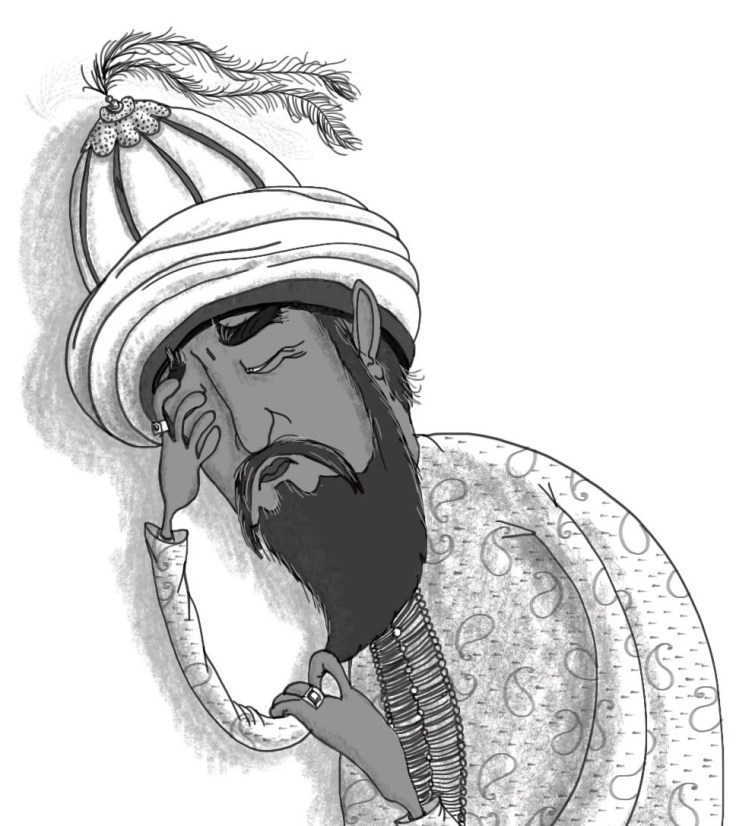
A very worried Shah Zaman, the sultan who governs over the Islands of the Children of Khaledan and the father of Prince Camar al-Zaman – in The Adventures of Prince Camar and Princess Badoura.
Grand Vizier
No one can rule a kingdom very well on their own – it’s just too big a job! The grand vizier was a trusted and wise person selected to be the second-in-command. Just like many countries today have a prime minister who is in charge of all the other ministers, a sultan would have had a grand vizier who was in charge of all the other viziers at court. The grand vizier was so powerful that only the sultan himself could tell him what to do.
Jinn / Genies
As in stories from many other parts of the world, Arabian stories often contain magical supernatural beings. In the Western world we have fairies,demons and many more, while in the East we often find jinn. Sometimes written in English as genies, jinn can be good or bad, kind or evil. They have many magical powers and are said to be made from the fire of scorching winds, unlike humans who are made of clay. They are generally bigger than humans and can have animal parts such as horns or wings. We say ‘one jinni’ but ‘two jinn’.
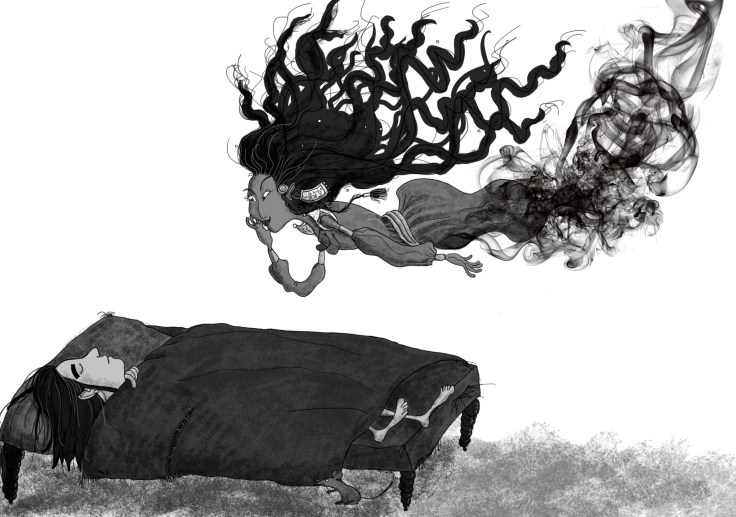
In The Adventures of Prince Camar and Princess Badoura, Maimoune is a powerful genie who visits Prince Camar while he is imprisoned in the old abandoned tower. Maimoune and her rival Danhasch together create much mischief!
Click on the images below to see inside these wonderful books:
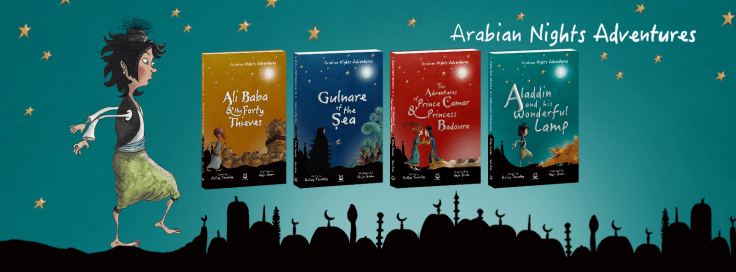
Arabian Nights Adventures is an exciting new young reader series of tales from the Arabian Nights. Thirteen illustrated, black & white paperbacks feature the best tales from The Nights, masterfully retold by Kelley Townley and with fantastic illustrations by Anja Gram. Fun, gripping, beautifully told and illustrated, they are perfect for introducing young readers to the rich stories from this classic collection.
Stories to be included in this landmark collection are:
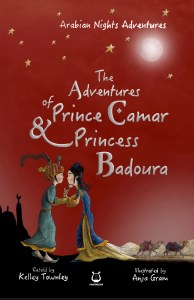
1. The Adventures of Prince Camar & Princess Badoura
2. Aladdin and his Wonderful Lamp
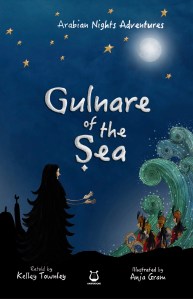
3. Gulnare of the Sea
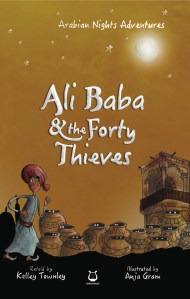
4. Ali Baba and the Forty Thieves
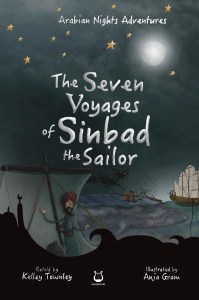
5. The Seven Voyages of Sinbad the Sailor
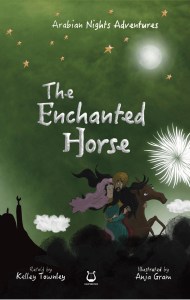
6. The Enchanted Horse
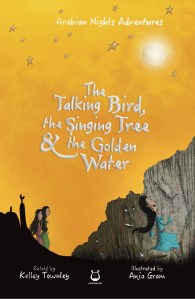
7. The Talking Bird, the Singing Tree and the Golden Water
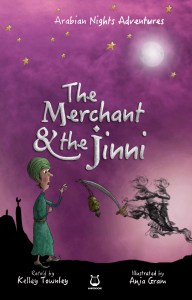
8. The Merchant and the Genie
9. The Tale of Zubaidah and the Three Qalandars
10. The Adventures of Harun al-Rashid, Caliph of Baghdad
11. The Three Princes, the Princess and the Jinni Pari Banou
12. The Fisherman and the Genie
13. The King’s Jester (also known as The Little Hunchback)
All books in the Arabian Nights Adventures series can be purchased on Amazon.
We are excited to be publishing the third book in the Arabian Nights Adventures series. Gulnare of the Sea is one of the enduringly entertaining tales from The Arabian Nights. Full of plot twists and spectacular underwater kingdoms, it’s a breathtaking story that’s ideal for 7-11 year old readers.
Here for the first time is a preview of our wonderful new edition of this old classic.
There is much scope for adopting Harpendore’s new Arabian Nights Adventures books in primary schools
As fans of the classic Arabian Nights tales know, these stories take place in a sweeping variety of settings – from North Africa to Turkey, Baghdad to Cairo, Greece to Damascus, India, Basra, China and Persia. They reflect the huge range of cultures and civilisations – as schools up and down the country increasingly do – that have contributed to the collection over thousands of years. Today the Arabian Nights are part of the world’s cultural heritage and illustrate the powerful connections that have always existed between East and West. For the Key Stage 2 (or early Key Stage 3) teacher of English, history, geography, citizenship, RE, art and drama who wishes to include a multi-cultural dimension into their lesson plans, these stories provide an exciting wealth of material waiting to be explored.
The Arabian Nights tales are famed for using the device of ‘stories within stories’. Because the Harpendore editions remain unabridged and retain this rich structure, they introduce young readers, in a compelling yet unconscious way, to the use of such narrative devices in creative writing and story-telling. The titles that particularly exemplify this approach are The Merchant and the Jinni, The Tale of Zubaidah and the Three Qalandars, The Adventures of Harun al-Rashid, Caliph of Baghdad, The Fisherman and the Jinni and The King’s Jester (better known as The Little Hunchback).
The Arabian Nights tales describe a world of enchantment. Magic is commonplace, humans change form, genies exist and wicked sorcerers abound. This is the stuff of great stories. Research by Amira El-Zein published by Syracuse University Press has argued that beliefs regarding the jinn – a concept that translates into ‘genies’ or even ‘fairies’ in Western literature – are in fact deeply integrated in Muslim culture and have a constant presence in legends, myths, poetry and literature. In Harpendore’s Arabian Nights Adventures we largely retain the term jinn in preference to genies or fairies – with jinni being the singular form. The stories provide ideal material for primary and early secondary school teachers to use when exploring legends, myths, literature and beliefs across a variety of different cultures and time periods.
Arabian Nights Adventures is an ideal collection of chapter books for Key Stage 2 readers who have outgrown their reading scheme books and are ready for new adventures. There is a nice balance of shorter stories and longer epics which caters to readers at different stages. Furthermore the series promises to be very enticing for the more reluctant reader – the design is fresh and modern, the language warm and accessible, the typesetting clear, and there are lots of cheeky illustrations inside.
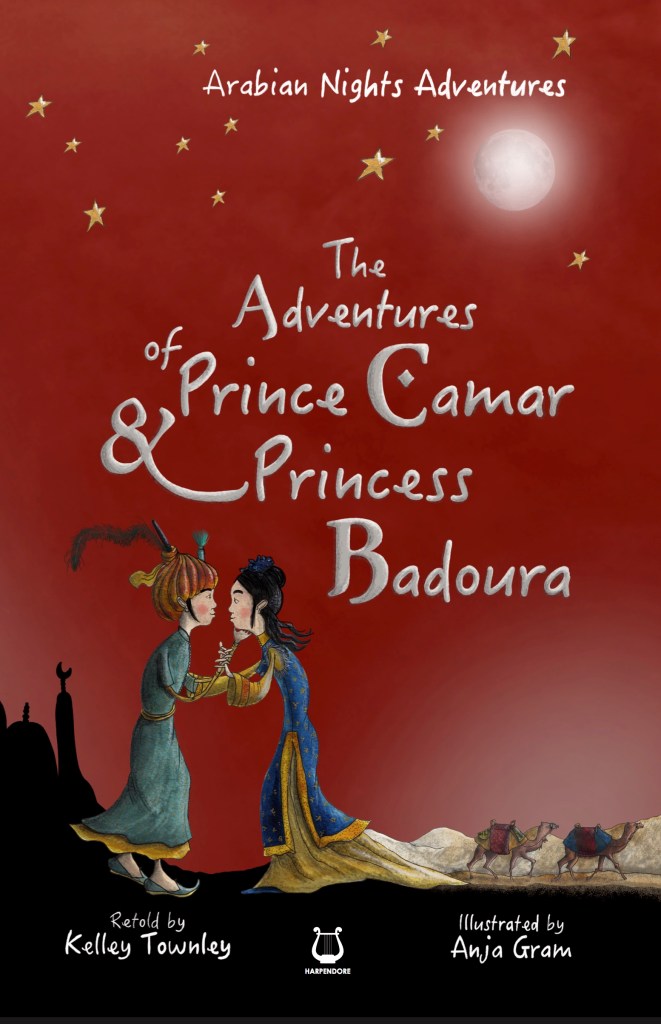
The Adventures of Prince Camar and Princess Badoura is a rarely-told gem from The Arabian Nights and we are delighted to be publishing this modern retelling.
A young prince defies his father and is banished to a draughty old abandoned tower. A beautiful princess turns away all her suitors and so is confined to her chambers inside a magnificent palace of jewels. Thanks to the antics of two magic genies, the royal pair meet one night as they sleep – and are magically transported back to their own beds before morning. But was it a real encounter or an enchanted dream?
Mischievous genies, secret identities, evil birds, hidden treasure and more: join Prince Camar and Princess Badoura on their epic adventures as they search for each other across the ancient lands of Arabia. With only the tiniest of clues to guide them, can they succeed?
All titles from the Arabian Nights Adventures series are available to purchase on Amazon.
13 illustrated, black & white paperbacks featuring the best tales from The Arabian Nights. Retold by Kelley Townley. Illustrated by Anja Gram. Ages 7+ years.
This is an exciting new young reader series of tales from The Arabian Nights. Fun, gripping, beautifully told and illustrated, they are perfect for introducing young readers to the rich stories from this classic collection.
The collection includes traditional favourites such as Aladdin and his Wonderful Lamp, The Seven Voyages of Sinbad the Sailor and Ali Baba and the Forty Thieves as well as less well-known gems such as The Tale of Zubaidah and the Three Qalandars,Gulnare of the Sea … and more.
These contemporary retellings will captivate readers of any age. The series style is fresh and the print inside is beautifully typeset, making them an ideal collection of chapter books for children who have outgrown their reading scheme books and are ready for new adventures.
Within the series are a balance of shorter stories and longer epics. The longer stories are often comprised of ‘stories within stories’, enabling children to experience devices of narrative structure within story-telling.
Arabian Nights Adventures books are perfect for collecting. When arranged on bookshelves the distinctive spines of these numbered editions reveal the characteristic Arabian Nights cityscape which grows as new stories are added – a design made specially for 1,001 nights’ tales!
This month we’re incredibly pleased to be publishing the first title in a fabulous new series of modern retellings of the best tales from The Arabian Nights.
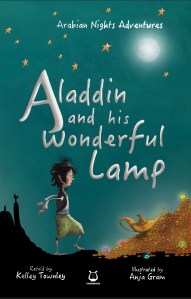
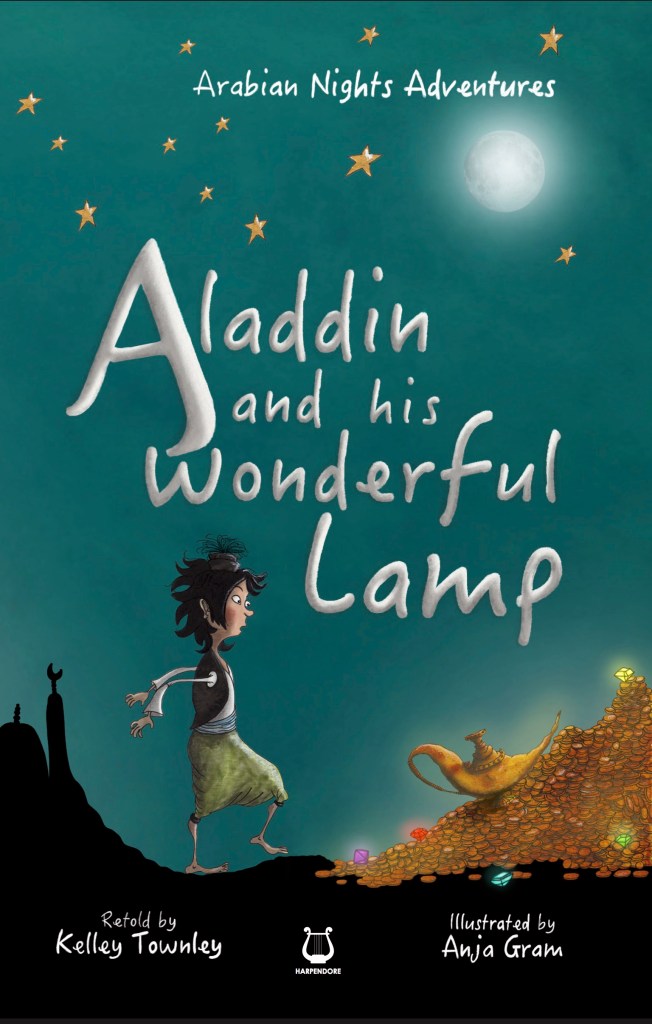
The story of Aladdin and his Wonderful Lamp is beloved by young and old alike. Aladdin is a poor boy who lives with his mother in the ancient kingdom of Cathay. One day a strange man appears offering untold riches and young Aladdin is sorely tempted. Join Aladdin on his incredible adventures and visit the cave of treasures. A world of magic awaits you but watch your step – there’s mischief lurking at every turn!



 Harpendore
You must be logged in to post a comment.