Many Arabian Nights stories feature royal people such as sultans, kings, emperors or the shah, important people such as viziers and grand viziers, and magical supernatural beings such as jinn or genies.
But how much do you know about them?
Sultan / King / Emperor / Shah
Before we had presidents and prime ministers, leaders chosen by ordinary citizens who vote, we had families who ruled. When the old leader died their eldest child would often rule next. In some countries people use the words king or queen. In other countries different words are used. Sultan is an Arabic word for a powerful ruler of a smaller province. Emperor is often used when the leader rules over a very large territory. Shah is a Persian word that refers to the emperor of the old Persian Empire. But they all mean similar things – the leading member of a ruling family.
Grand Vizier
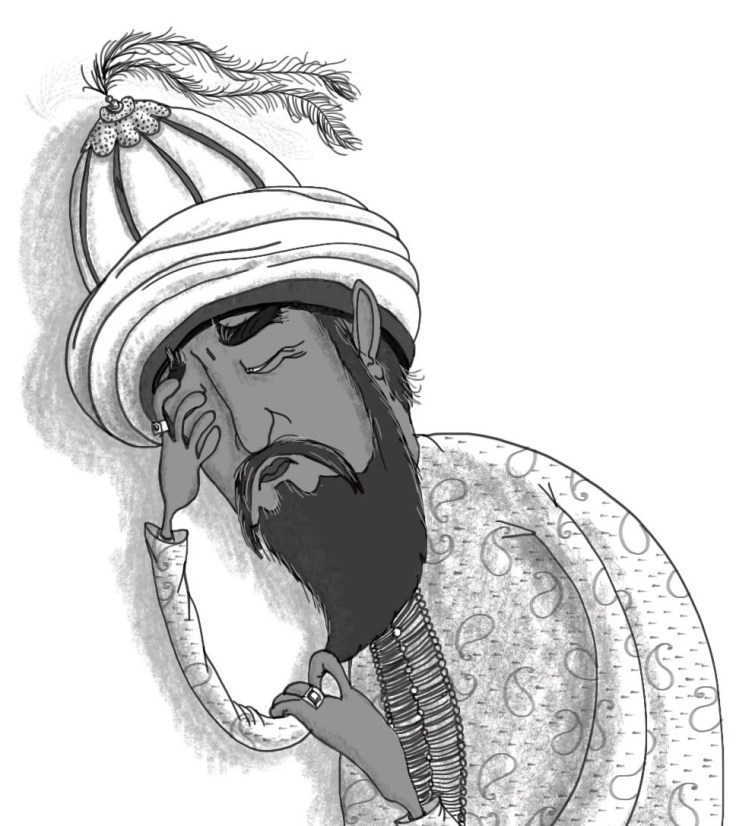
No one can rule a kingdom very well on their own – it’s just too big a job! The grand vizier was a trusted and wise person selected to be the second-in-command. Just like many countries today have a prime minister who is in charge of all the other ministers, a sultan would have had a grand vizier who was in charge of all the other viziers at court. The grand vizier was so powerful that only the sultan himself could tell him what to do.
Jinn / Genies
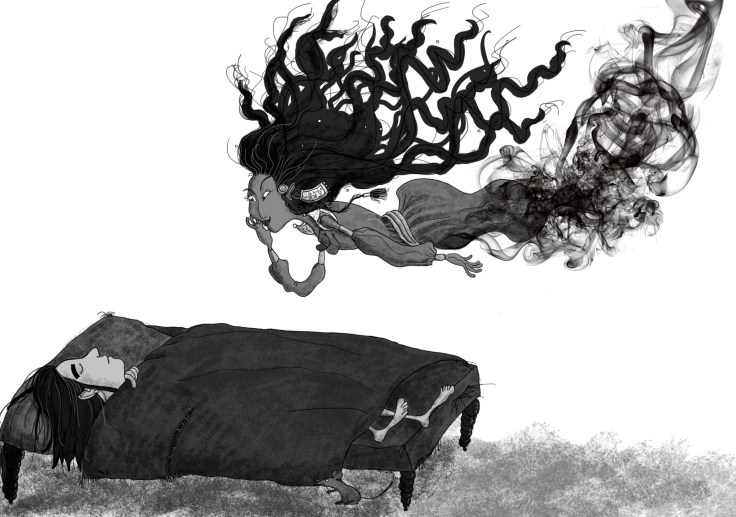
As in stories from many other parts of the world, Arabian stories often contain magical supernatural beings. In the Western world we have fairies, demons and many more, while in the East we often find jinn. Sometimes written in English as genies, jinn can be good or bad, kind or evil. They have many magical powers and are said to be made from the fire of scorching winds, unlike humans who are made of clay. They are generally bigger than humans and can have animal parts such as horns or wings. We say ‘one jinni’ but ‘two jinn’.
 Harpendore
You must be logged in to post a comment.